
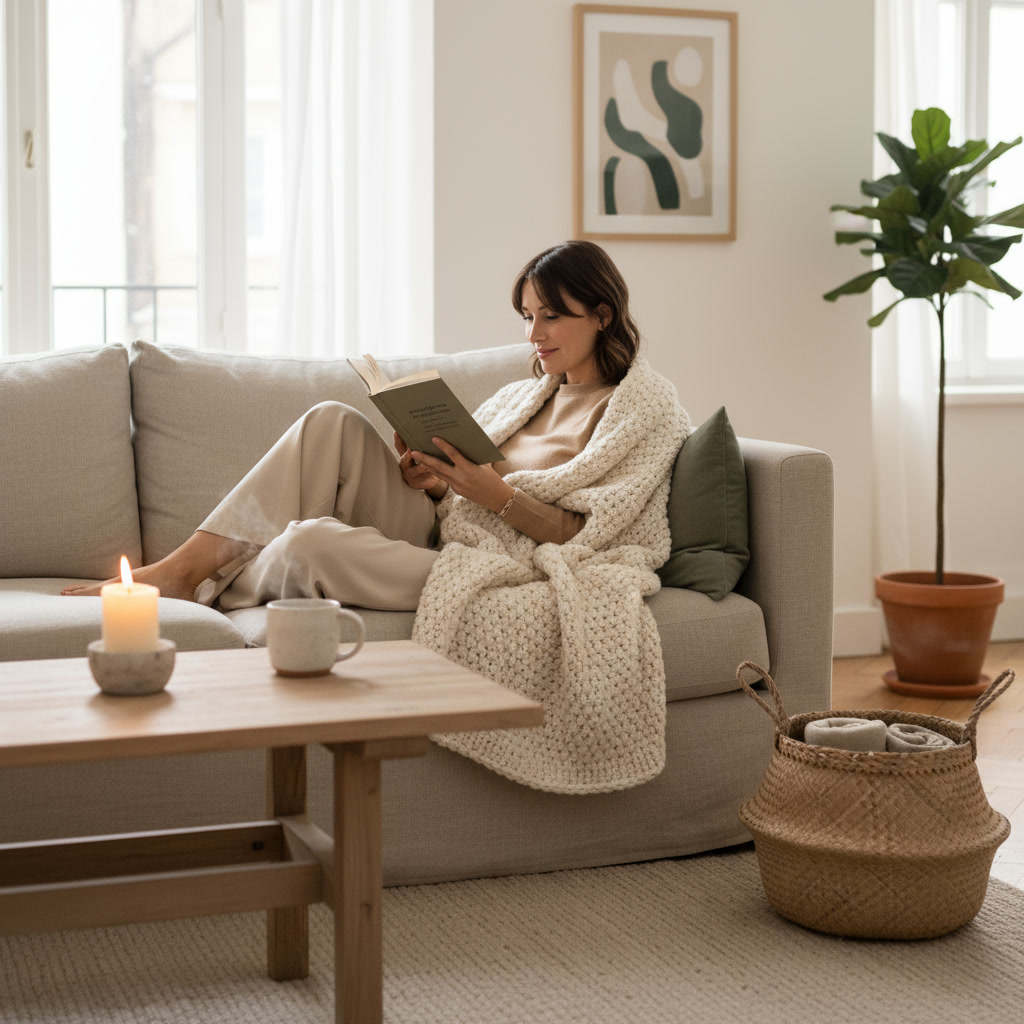
Cozy minimalism is more than just a design trend; it’s a philosophy of creating an emotional space. It invites you to live intentionally — surrounded only by what calms you, inspires you, or holds deep meaning. Unlike sterile minimalism, cozy minimalism honors warmth, comfort, and sensory peace.
For introverts, this style feels like a peaceful sanctuary. It removes the visual noise that drains energy and replaces it with soft textures, muted colors, and intentional breathing space, creating a tranquil environment that soothes the soul.
Minimalism’s Gentle Cousin: Where Comfort Meets Simplicity
Imagine stepping into a room with natural light, a soft woven rug, one perfectly chosen piece of art, and the faint scent of sandalwood. Cozy minimalism celebrates ‘enough Ness‘, the idea that you have precisely what you need and nothing more. It doesn’t demand perfection; it nurtures peace with its cozy elements.

Why Introverts Crave Quiet Spaces and Meaningful Objects
Introverts often absorb their surroundings deeply. A cluttered room can feel like emotional chaos. Cozy minimalism restores balance by creating visual stillness — every item present has purpose and emotional resonance. This could be a piece of art that reminds you of a peaceful moment, a book that brings you comfort, or a plant that symbolizes growth and renewal. This cozy yet minimalist approach provides an introvert’s space with the serenity they crave.
The Emotional Benefits of Cozy Minimalism for Introverted Women

Healing from Overstimulation Through Calm Design
When you simplify your surroundings, you also soothe your nervous system. Every gentle hue and soft curve invites rest, embodying the core of cozy minimalism. Your home becomes a sensory cocoon — a place where you can retreat, breathe, and reset.
How Simplicity Supports Mental Clarity and Emotional Regulation
Fewer choices lead to less decision fatigue. Minimal decor means your mind can focus on what truly matters — creativity, reflection, or simply being. By releasing what doesn’t serve you with cozy minimalism, you create space for joy, presence, and a slower pace of living.
Step-by-Step Guide to Building a Cozy Minimalist Home

Step 1: Start with a Mood of Intention, Not a List of Rules
Forget checklists. Begin by asking, “How do I want to feel when I enter this space?” Cozy minimalism isn’t about owning less — it’s about feeling more connected to what you own.
Step 2: Choose Calming Colors That Reflect Inner Stillness
Soft neutrals, such as cream, clay, blush, or sage green, evoke serenity. They absorb natural light and create a gentle visual rhythm — a form of emotional feng shui.

Step 3: Layer Textures — Soft Throws, Natural Woods, and Candlelight
Balance minimalism’s simplicity with sensory warmth. Mix linen curtains with rattan baskets, knitted blankets, or matte ceramics for a cohesive look. Texture adds intimacy without adding clutter.
Step 4: Curate, Don’t Accumulate — Keep Only What Heals
Hold each item and ask, “Does this bring me peace or pressure?” The answer decides its fate. This mindful editing turns decluttering into a healing ritual, bringing a sense of relief and emotional lightness to the process.
DIY Cozy Minimalism: Small Changes with Big Emotional Impact

Upcycling with Meaning: Turn Old Items into Sentimental Pieces
For instance, a chipped mug from your grandmother’s kitchen can be repurposed as a planter, and a worn-out Sweater can be transformed into a cushion cover.
Scent Therapy and Ambient Light: The Forgotten Layers of Minimalism
Soft lighting and scent are often overlooked yet powerful design tools. Swap harsh overhead lights for warm lamps and natural candles. Add lavender or cedarwood essential oils for an instant sense of calm. Sensory design is emotional design.
How to Maintain Emotional Balance in a Minimalist Lifestyle

The Art of Re-Evaluating Your Space Every Season
Minimalism is never static. Each season, walk through your home and notice what no longer aligns with your energy. Release what feels heavy; keep what feels healing.
Journaling Prompts for Decluttering Emotional Energy
Try writing:
- What objects hold emotional weight I no longer need?
- What part of my space feels peaceful — and why?
- How can I create an environment that reflects my current growth?
This practice helps transform decluttering into a mindful act.
FAQs About Cozy Minimalism and Introverted Living
- 1. Is cozy minimalism just another design trend?
- No — it’s a lifestyle rooted in mindfulness, comfort, and personal healing. It goes beyond aesthetics to prioritize emotional wellness.
- 2. Can cozy minimalism work in small apartments?
- Absolutely. Focus on multi-functional furniture, light-colored palettes, and vertical storage to maintain an open space.
- 3. How can I start if I feel overwhelmed by clutter?
- Begin with one corner. Clear a surface, light a candle, and feel the difference. Momentum grows from peace, not pressure.
- 4. Does cozy minimalism mean avoiding color?
- Not at all. Use soft, muted colors that evoke a sense of calm energy. Think blush, olive, sand, or ivory.
- 5. Can cozy minimalism help with anxiety?
- Yes. The calm environment and sensory simplicity help regulate emotions and reduce overstimulation.
- 6. Where can I find inspiration for cozy minimalist decor?
- Explore resources like The Minimalist Home by Joshua Becker or Pinterest boards focused on neutral interiors and slow living.
Final Reflections — Creating a Space That Holds You Gently

A cozy minimalist home is not about less — it’s about lightness. It’s a quiet rebellion against chaos and consumerism, a sanctuary built from care and clarity.
For the introverted woman, it becomes more than a space — it becomes a mirror of her healing, creativity, and inner peace.
If you’re craving even more inspiration for shaping a space that feels like an authentic reflection of your soul, you’ll love my guide on 10 Ways to Design a Calming Home That Feels Like You. It’s filled with gentle, actionable ideas for creating harmony between your inner peace and your physical surroundings — from sensory layering to emotional design choices that nurture calm from the inside out.
If your home has been feeling heavy, cluttered, or emotionally loud, this gentle starter kit is a soft place to begin again. Create a Home That Feels Like a Deep Exhale was designed for the quiet soul who longs for stillness, warmth, and a space that feels like safety. Inside, you’ll find simple steps, grounding rituals, a cozy color palette, and journal prompts to help you reconnect with yourself through your home.
“What’s on your heart today? I’d love to hear from you.” a Reply