
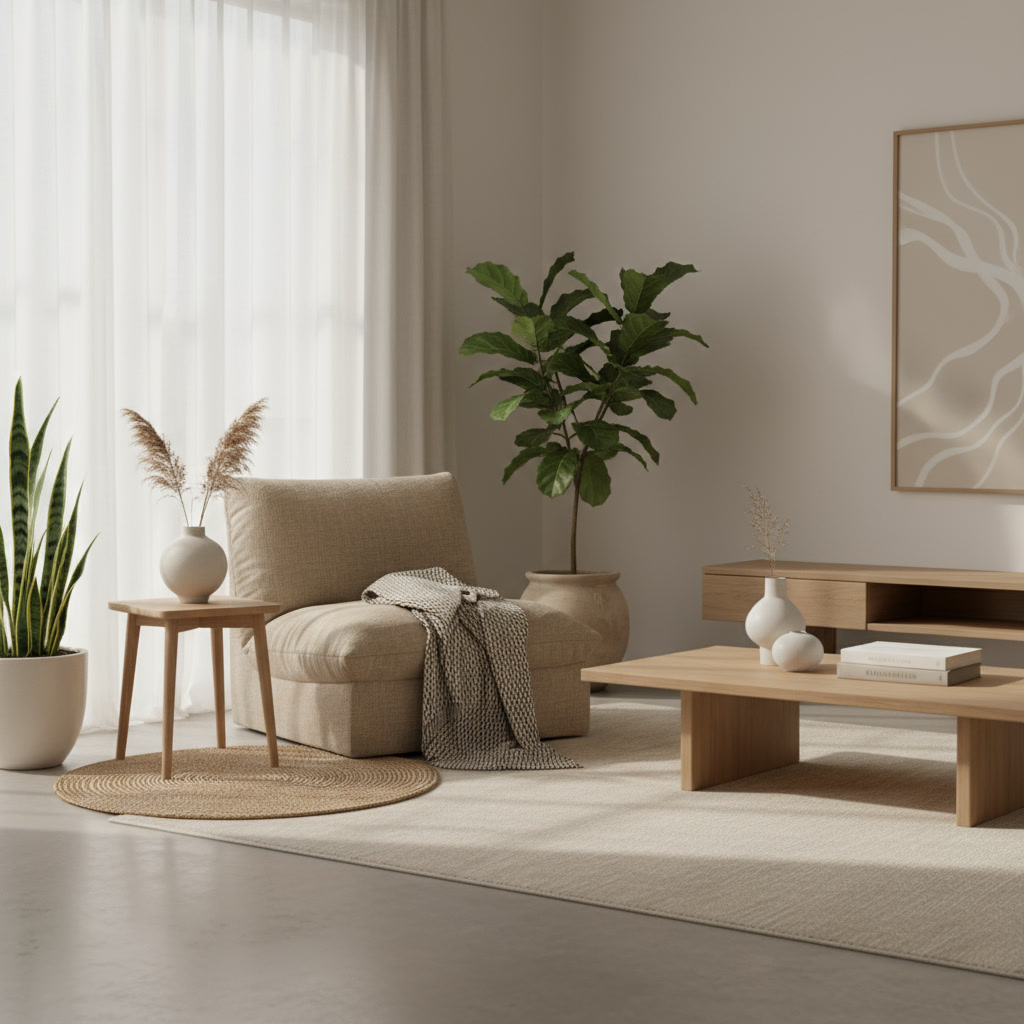
Your home should feel like a deep breath out — a soft pause in a noisy world. Creating a calming home isn’t just about design trends; it’s about crafting an environment that mirrors your inner peace. Whether you live in a small apartment or a family home, these gentle design ideas and DIY projects will empower you to create a cozy, mindful space that feels authentically you.
You might also like → 5 Gentle Rituals for a Clearer Mind
1. Start With a Clean Slate

Before adding anything new, empower yourself with a transformative decluttering session. Clutter is like background noise — you stop noticing it, but it keeps your mind buzzing. Take one weekend to simplify: sort, donate, or repurpose items that no longer spark joy. You’ll be amazed at the difference it makes.
DIY Idea: Create labeled donation boxes for “Keep,” “Give,” and “Recycle.”
Once the space feels lighter, you’ll notice how much easier it is to decorate intentionally.
Related post: How to Rebuild Your Confidence After Life’s Storms
2. Choose a Soothing Color Palette

Color has a quiet influence on our emotions. Muted tones — think soft beige, dusty blue, or sage green — help ground the senses.
If you crave more personality, add it mindfully: a pale terracotta accent wall, blush throw pillows, or soft teal vases can gently energize a neutral space.
DIY Tip: Test your paint choices on small boards before making a commitment. Observe how the light shifts throughout the day — natural light at noon versus the cozy amber glow at dusk can completely transform a hue.
Find eco-friendly paint samples at Clare Paint.
3. Layer Natural Textures

The fastest way to make a space feel warm and lived-in is texture. Linen curtains, jute rugs, reclaimed wood tables, and ceramic pottery bring soul to sterile spaces.
Transitioning from synthetic to natural fibers not only improves air quality but also helps your home feel more in sync with nature’s calm rhythm.
DIY Project: Find a thrifted side table and give it a makeover — sand, stain, and seal it with a low-VOC finish for an earthy, handmade feel.
4. Let the Light In

Natural light is a built-in mood enhancer. Keep window treatments simple — airy linen or sheer cotton works wonders. As daylight fades, shift to soft, layered lighting: warm-toned LED bulbs, paper lanterns, and candles.
Pro Tip: Opt for bulbs labeled 2700K–3000K for a warm, golden glow that mimics a sunset all day long.
Shop energy-efficient lighting options at IKEA Lighting
5. Add Meaningful Decor

A calming home tells your story without shouting. Instead of filling shelves with random décor, curate what truly matters — heirlooms, art prints from your travels, or handmade crafts. This personal touch will make you feel more connected and at home in your space.
DIY Example: Frame a family recipe written in your grandmother’s handwriting for your kitchen wall — instant nostalgia with purpose.
Try this next — Reconnecting with Your Heart: A 4-Step Guide
6. Bring the Outdoors In

Plants are nature’s simplest therapy. They purify the air, soften corners, and remind us to slow down. If you’re short on sunlight, pothos, ZZ plants, and peace lilies thrive almost anywhere.
DIY Touch: Paint your planters in soft pastel tones or wrap them with jute twine for a handmade finish.
Explore low-maintenance houseplants from The Sill
7. Create Cozy Zones

Even if your home has an open layout, carve out little sanctuaries — a reading nook, meditation corner, or tea station. Use rugs, shelves, or lighting to define zones without the need for walls. These cozy zones will make you feel at home and comfortable.
Transition from one area to another as you would in a gentle melody — soft, cohesive, and flowing.
DIY Idea: Create a small reading corner with a thrifted armchair, a floor lamp, and a side table for under $100.
8. Incorporate Scent and Sound

A serene home engages every sense. The soft crackle of a candle, a hint of lavender in the air, and ambient lo-fi music can transform an ordinary evening into a sensory retreat.
DIY Recipe: Create your own calming room spray by combining distilled water, witch hazel, and essential oils (such as lavender, chamomile, or bergamot). Shake gently and mist whenever your space feels stale.
9. Simplify Your Daily Flow

A truly calming home supports your routines, not complicates them. Create functional flow with small details — a drop zone by the door, labeled storage bins, or a cozy breakfast station.
DIY Hack: Repurpose a wooden tray into a “morning ritual station” with a candle, journal, and your favorite mug.
These intentional systems quietly reduce chaos and invite calm to linger.
See related — Digital Detox for Introverts Planner.
10. Let It Evolve With You

A home that feels like you should evolve as you do. Rearrange furniture when energy feels stagnant, swap art when you’re inspired, or repaint a wall when your mood changes. Flexibility keeps your space alive and authentic — not frozen in perfection.
More cozy living ideas at Apartment Therapy.
FAQs
What colors make a home feel calm?
Soft tones, such as beige, sage green, dusty pink, and light gray, evoke a sense of balance and comfort.
How can I make my home cozy on a budget?
DIY! Upcycle furniture, add thrifted textiles, and repurpose decor items that tell a story.
What scents promote calm?
Lavender, chamomile, vanilla, and sandalwood help reduce stress and promote better sleep.
Can minimalism feel cozy?
Yes — when you focus on texture, warmth, and emotional meaning rather than empty space.
Your Home, Your Sanctuary
Designing a calming home that feels like you is about intention, not perfection. With each layer of texture, light, and meaning, your home becomes a mirror of your peace.
Start small, stay consistent, and let your sanctuary evolve — one mindful touch at a time.
Bring serenity into your space, one small step at a time. This free printable checklist walks you through ten simple ways to design a home that feels peaceful, grounded, and truly you. From decluttering mindfully to layering cozy textures, each step helps you create a sanctuary that supports calm living.
Download it below and start transforming your home with intention today.
Affiliate Disclaimer: Please note: This post contains affiliate links. If you purchase through these links, I may earn a small commission at no extra cost to you. This helps support Glow After The Storm and allows me to continue providing valuable content.
Disclaimer: The content provided on Glow After The Storm, including all blog posts, videos, free resources, and digital products, is for informational, educational, and inspirational purposes only. Nnanna (or ‘Glow After The Storm’) is not a licensed mental health professional, therapist, or medical doctor. The information shared is based on personal experience, general research, and empathetic insights and is not intended to be a substitute for professional medical advice, diagnosis, or treatment. Always seek the advice of your qualified mental health professional or other healthcare provider with any questions you may have regarding a medical or mental health condition. If you are experiencing a mental health crisis, please seek immediate professional help or contact a crisis hotline in your region. Your well-being is our priority, and professional support is always recommended when needed.
“What’s on your heart today? I’d love to hear from you.” a Reply