
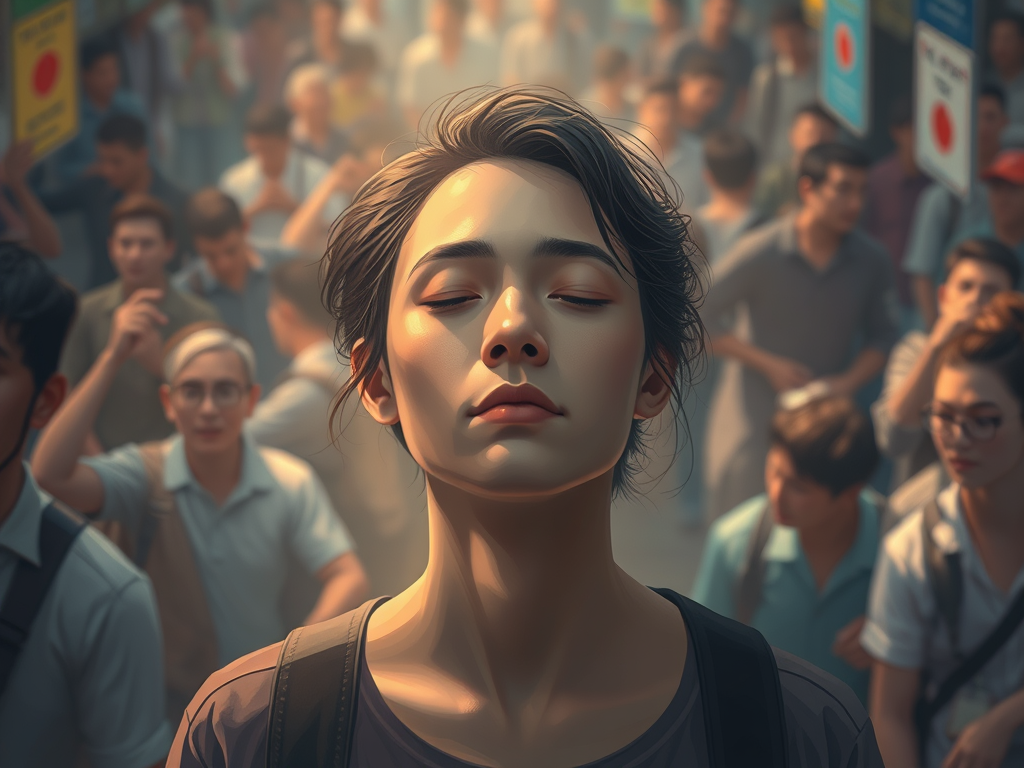
In a world that often feels relentlessly loud, busy, and constantly connected, finding a sense of inner stillness can seem like an impossible dream. For us introverts and sensitive souls, navigating crowded spaces, bustling offices, or even lively social gatherings can quickly tip from stimulating to utterly draining. The constant hum of conversation, the flashing lights, the sheer density of people – it all adds up to profound sensory overload.
Imagine the relief of carrying your calm with you, even in the most crowded of places. This survival guide is your beacon of hope, offering strategies to find peace amidst density. It’s a promise that you can protect your energy and cultivate a sense of inner quiet, no matter how overwhelming the world around you may seem.
This post provides essential tools to help you cultivate inner stillness in a crowded world. These strategies will enable you not just to survive, but to thrive amid overwhelming circumstances, external environments, ensuring your introvert energy remains intact.
Affiliate Disclaimer: Please note: This post contains affiliate links. If you purchase through these links, I may earn a small commission at no extra cost to you. This helps support Glow After The Storm and allows me to continue providing valuable content.

The Introvert’s Crowded World Challenge
Why do crowded external environments uniquely challenge introverts? It comes down to our internal wiring:
- Deep Processing: We process information deeply, meaning every sensory input (a sound, a sight, an interaction) gets more attention in our brains, quickly leading to overload.
- Energy Depletion: Unlike extroverts, who are energized by external stimulation, introverts’ energy is depleted by it. The more noise and people, the faster our battery drains.
- Sensitivity to Stimuli: Many introverts are also highly sensitive, meaning lights, sounds, and even smells in a dense environment are experienced more intensely.
Since avoiding crowded places altogether isn’t always possible, developing strategies for inner stillness becomes a crucial survival skill for introverts.
5 Strategies for Cultivating Inner Stillness in a Crowded World

1. The Sensory Shield Strategy
- What it is: Proactively reducing the amount of sensory input you receive in overwhelming environments.
- Why it helps: This is your primary defense against sensory overload. By dampening the input, you reduce the strain on your nervous system, allowing you to conserve your energy and maintain a sense of calm in even the most overwhelming environments.
- How to implement:
- Auditory: Carry discreet earplugs. If appropriate, wear headphones (even without music) to signal you’re unavailable for conversation.
- Visual: Wear sunglasses even indoors if the lights are harsh. Find a quiet corner to subtly look away from the main action for a few moments.
- Amazon Find: High-fidelity [Loop Earplugs (or similar discreet earplugs) https://amzn.to/45VkG4U] are fantastic for reducing noise volume without completely blocking conversation, allowing you to participate while protecting your ears.
- DIY/Free: Step outside for a few minutes. Find a quiet corner or even retreat to a restroom stall for a few moments of visual and auditory calm.
2. The Mindful Micro-Pause
- What it is: Taking very short, intentional moments to reconnect with yourself and your breath amid a busy situation.
- Why it helps: These tiny breaks act as mini resets, preventing overwhelm from escalating. They re-anchor you in your body and the present, pulling you away from external chaos.
- How to implement: In a crowded room, step aside briefly. Take 3-5 slow, deep breaths, focusing only on the sensation of air entering and leaving your body. Or do a quick body scan, noticing your feet on the ground or your shoulders relaxing.
- Amazon Find: A small, tactile [Worry Stone or Smooth River Rock https://amzn.to/4lm3uuh] can be a discreet tool to hold and focus on during your micro-pause.
- DIY/Free: Use your hand as a breathing guide: trace your fingers up on the inhale, down on the exhale.
3. The Selective Engagement Principle
- What it is: Consciously choosing when and with whom you engage in conversation, rather than feeling obligated to interact with everyone. This principle encourages you to identify one or two people you genuinely want to talk to and focus your energy there. It allows for comfortable silences in conversations and relieves the pressure to join every group or initiate every chat.
- Why it helps: For introverts, constant small talk is incredibly draining. Selective engagement protects your social energy, allowing you to prioritize meaningful connections.
- How to implement: Identify one or two people you genuinely want to talk to. Focus your energy there. Allow for comfortable silences in conversations. Don’t feel pressured to join every group or initiate every chat.
- Amazon Find: A book on [Introvert Communication or Authentic Networking https://amzn.to/40IXbIP] can provide excellent scripts and strategies for navigating social interactions on your own terms.
- DIY/Free: Prepare a few open-ended questions about the event’s topic or shared interests beforehand to encourage deeper conversation with those you do engage with. For instance, ask about their thoughts on a recent industry development or their experiences with a particular hobby.

4. The Visual Anchor & Focus
- What it is: Choosing a single, static object in your environment to quietly focus on when feeling overwhelmed.
- Why it helps: When bombarded by stimuli, finding one point of focus provides an immediate anchor for your attention, preventing your mind from scattering.
- How to implement: In a busy environment, discreetly pick one object – a pattern on the wall, a plant, a distant piece of art. Softly gaze at it for a few seconds or a minute. Notice its details without judgment. This brings you back to a singular, calm point.
- Amazon Find: A small, aesthetically pleasing [Desktop Fidget Toy (silent) https://amzn.to/3TPwUVD] can serve as a personal, portable visual anchor you can carry with you.
- DIY/Free: Use a small, decorative item you already carry (such as a unique keychain or a patterned button) as your personal visual anchor.
5. Schedule Your Recharge (Your Non-Negotiable Return to Stillness)
- What it is: Pre-planning and fiercely protecting your quiet recovery time after navigating a crowded environment.
- Why it helps: This is the critical final step in the survival guide. It acknowledges that energy will be spent, and ensures intentional replenishment to avoid the dreaded ‘social hangover’ or introvert burnout.
- How to implement: Before attending a busy event, block out quiet time in your calendar immediately afterward. This means no more plans, no more demands. Use this time for activities that truly restore you, such as quiet reading, listening to calming music, journaling, or simply resting in solitude.
- Amazon Find: A cozy [Weighted Blanket https://amzn.to/4kMAfjj] can provide a deeply comforting and grounding sensation during your post-event recovery time.
- DIY/Free: Prepare your quiet space at home before you leave – dim the lights, have a comforting drink ready, and set out a journal for immediate decompression.

Embrace Your Stillness, Thrive in the Noise
Navigating a crowded world as an introvert doesn’t mean avoiding life; it means mastering the art of cultivating inner stillness. By implementing these introvert survival guide strategies, you empower yourself to protect your energy, manage sensory overload, and find genuine peace amidst the density. Your quiet strength is your greatest asset – honor it, nurture it, and let your glow shine, no matter how loud the world gets.
What’s your go-to strategy for finding calm in a crowded environment? Share your insights in the comments below!
If you’re looking for more ways to cultivate peace and embrace your unique introverted strength, be sure to subscribe to my blog for exclusive content and resources.

Pin this post for later to remind yourself to always protect your inner peace!
Disclaimer: The content provided on Glow After The Storm, including all blog posts, videos, free resources, and digital products, is for informational, educational, and inspirational purposes only. Nnanna (or ‘Glow After The Storm’) is not a licensed mental health professional, therapist, or medical doctor. The information shared is based on personal experience, general research, and empathetic insights and is not intended to be a substitute for professional medical advice, diagnosis, or treatment. Always seek the advice of your qualified mental health professional or other healthcare provider with any questions you may have regarding a medical or mental health condition. If you are experiencing a mental health crisis, please seek immediate professional help or contact a crisis hotline in your region. Your well-being is our priority, and professional support is always recommended when needed
“What’s on your heart today? I’d love to hear from you.” a Reply